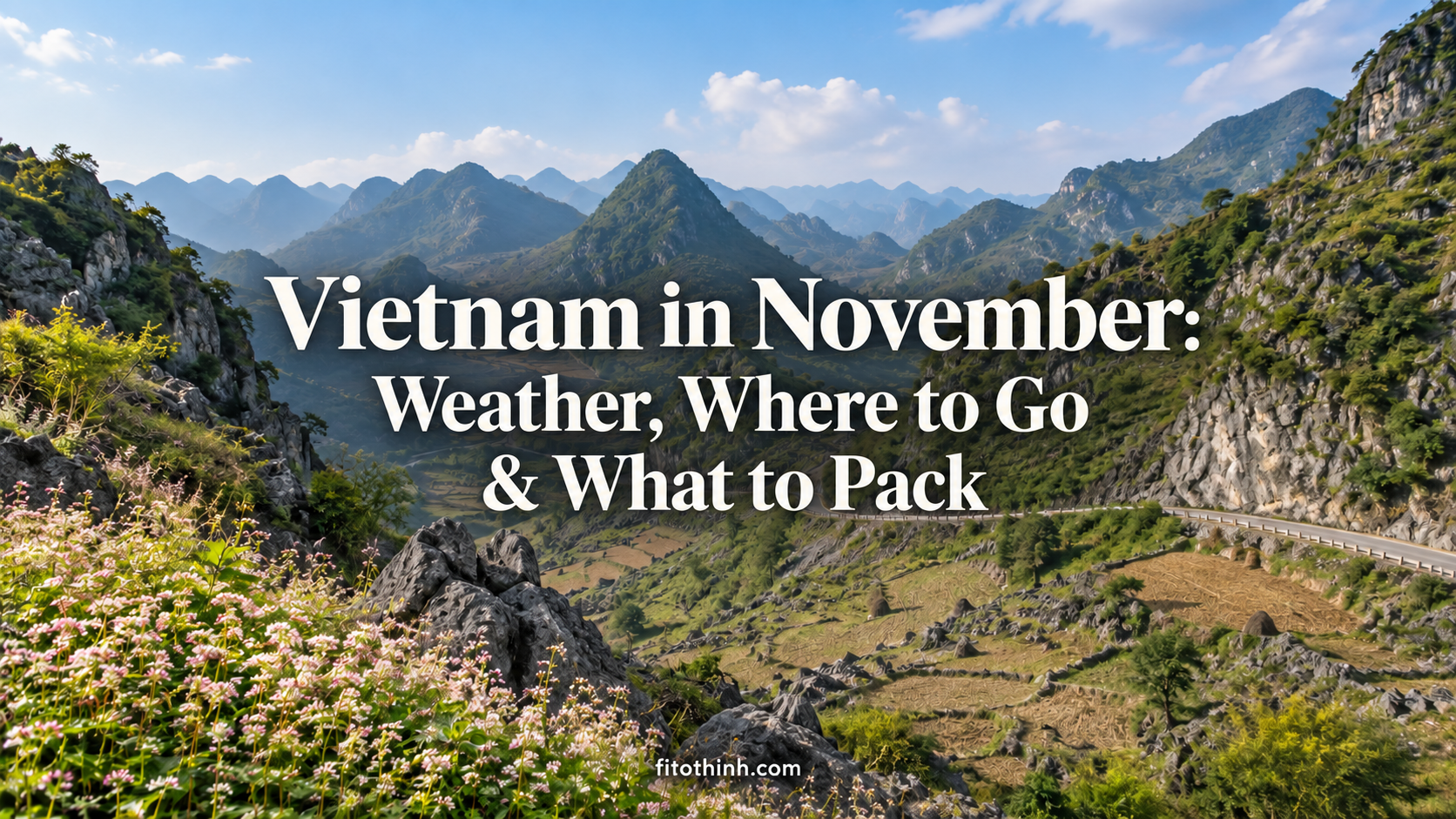
You might wear a light jacket beside Hanoi’s Hoan Kiem Lake, stop for buckwheat flowers in Ha Giang, open an umbrella in Hoi An, and order iced coffee in warm Saigon—all on one trip. Vietnam in November can give your suitcase a small identity crisis.
Yes, November can be one of the most rewarding months to visit. The important decision is where you go.
There is no single “Vietnam weather in November.” Our long north-to-south geography and changing elevations create very different conditions. A comfortable afternoon in Hanoi tells you little about a mountain pass or a central coastal town.
As a Vietnamese travel professional, my advice is to choose your route before choosing your clothes. This guide explains the regional weather, destinations I would prioritize, places needing flexibility, a realistic two-week itinerary and what to pack. You will also find a separate November 2026 outlook, so usual seasonal patterns are not confused with this year’s forecast.
Mục lục tóm tắt
Is November a Good Time to Visit Vietnam?
Yes—especially if you prioritize Northern Vietnam and allow for occasional rain in the south. Central Vietnam deserves more flexible plans.
November suits travelers who enjoy walking, food, cultural visits and mountain scenery. It is less straightforward if your entire holiday depends on sunny beaches around Da Nang.
Advantages:
- Often comfortable northern sightseeing, with less oppressive heat and humidity than summer.
- Seasonal interest in Ha Giang’s buckwheat flowers.
- Opportunities to combine northern landscapes with warm southern cities.
- Travel before the Christmas and New Year holiday period.
Possible drawbacks:
- Heavy rain and flooding can affect parts of Central Vietnam.
- Mountain evenings and exposed roads can feel cold.
- Storms or tropical depressions can still disrupt travel.
- Popular stays and small-group tours may need advance booking.
Vietnam in November at a Glance
Typical seasonal tendencies, not a forecast for your travel dates.
| Region | Typical feel | Rain situation | Best suited to |
|---|---|---|---|
| North | Mild lowlands; cool or cold mountains | Generally less rain than summer | Cities, scenery, walking |
| Central coast | Mild to warm; damp spells | Wetter period; flooding possible | Flexible cultural visits |
| South | Warm and tropical | Wet season easing; showers remain possible | Cities, Mekong, conditional beach plans |
These broad distinctions follow Vietnam Tourism’s regional climate guidance. Highland destinations have their own conditions; the central-coast row should not be applied automatically to Da Lat.
Vietnam Weather in November: North, Central and South
Northern Vietnam in November
Hanoi and Ninh Binh often offer comfortable sightseeing conditions. Lower-elevation days can feel pleasantly warm, while mornings and evenings invite another layer.
Ha Giang and Sapa require different preparation. Elevation, wind and cloud can make a mountain journey much colder than a city forecast suggests. Sapa’s official destination guide specifically identifies November as the start of its chillier period.
Pack long trousers, a warm layer and wind protection. For mountain travel, check the forecast for your overnight stop—not just Hanoi or Ha Giang’s gateway town.
Central Vietnam in November
Hue, Da Nang and Hoi An follow a later rainy-season pattern. November can bring persistent wet spells, heavy rain, rising rivers and transport disruption.
Vietnam Tourism places Hoi An’s rainy period broadly between September and January and highlights late-year flooding. Hue also has a late wet season, with flooding possible around September–November.
That does not mean every day is lost. However, sightseeing during light rain and traveling during a flood warning are very different situations. Plan around the latter when necessary.
Southern Vietnam in November
Ho Chi Minh City and the Mekong Delta remain warm. November is a transition toward drier conditions, although both destinations can still receive rain.
In Saigon, a rain symbol does not automatically mean a whole day indoors. Showers can be intense but concentrated into part of the afternoon. Check the hourly outlook and warnings before abandoning your plans.
I would keep outdoor sightseeing earlier and leave a museum or coffee break available later. My Ho Chi Minh City rainy-season guide explains how to arrange that kind of day.
November 2026 outlook: a separate planning update
Checked 18 September 2026: NCHMF’s latest seasonal bulletin located for this guide was issued on 15 September, covering October 2026–March 2027.
Its November projections suggest:
- Temperatures: generally 1–2°C above the long-term average nationwide, locally higher.
- Northern Vietnam and Thanh Hoa–Ha Tinh: rainfall 10–30% above average.
- Quang Tri through Lam Dong: rainfall generally 20–40% below average.
- Southern Vietnam: rainfall generally 5–15% below average.
The bulletin also projects below-average tropical storm/depression activity for October–December and a possible early end to the southern rainy season. These are regional, seasonal forecasts—not promises for individual destinations. NCHMF seasonal bulletin, 15 September 2026.
Below-average rainfall during a wet month can still include disruptive downpours. Conversely, above-average northern rainfall does not automatically make the north wetter than the central coast. Check the updated outlook and short-term forecasts closer to departure.
Best Places to Visit in Vietnam in November
Ha Giang: mountain roads and buckwheat flowers
Ha Giang is one of my strongest November choices for travelers comfortable with longer road journeys. The appeal combines limestone peaks, mountain passes, the Nho Que River and local markets. Vietnam Tourism specifically connects November with buckwheat-flower festivities.
Allow time for stops and weather changes.
The Loop is not a suitable place to learn motorcycling. Before self-driving, verify that your licence is valid for Vietnam and the vehicle, and that your insurance covers the activity. Consider a reputable driver-led car trip or experienced motorcycle operator; riding as a passenger still involves road risk.
Hanoi: slow walks and generous coffee breaks
November often makes walking more appealing than during summer. Explore the Old Quarter, circle Hoan Kiem Lake and reserve another outing for West Lake.
Build your days around a few sights and meals: a morning bowl of pho, a historical visit, then coffee.
Ninh Binh: limestone scenery without a mountain expedition
Ninh Binh suits travelers wanting landscapes with easier access from Hanoi. Choose a boat journey at Trang An or Tam Coc, add cycling where roads feel comfortable, and stay overnight if your schedule allows.
Come for the karsts and waterways. Rice fields vary with local crop cycles; November does not guarantee the bright green or golden foreground in a promotional photograph.
Sapa: trekking with realistic expectations
Choose Sapa for village walks, mountain accommodation and guided trekking. November is not a dependable choice for peak golden-rice photographs; the main terrace season is generally earlier.
Ask your guide about current trail conditions and choose a route matching your fitness. Mud, mist and cold can matter more than distance.
Ho Chi Minh City: food, culture and a useful southern base
Saigon works well for museums, markets, historic streets, evening meals and onward travel. Combine the Central Post Office area with a manageable walk, then explore a different neighborhood the next day.
My best walking routes in Ho Chi Minh City can help you group stops sensibly.
For several nights, compare hotels, hostels, boutique stays and serviced apartments. A kitchen, laundry and workspace can be useful midway through a longer trip. See my serviced-apartment guide for central HCMC if those facilities matter to you.
Mekong Delta: give the waterways an overnight stay
A day trip provides an introduction, but an overnight around Can Tho makes an early river outing much easier. Combine waterways with food, village visits and unhurried time beside the river.
Ask what a market visit currently involves rather than expecting old photographs of densely packed boats. Confirm boat conditions and life jackets with your operator. If time is limited, compare the options in my day trips from Ho Chi Minh City guide.
Phu Quoc: a beach option, with a forecast check
Phu Quoc generally moves into its more favorable season toward year-end. It is a reasonable beach candidate, but early November should not be booked on an assumption of uninterrupted sunshine.
Give the island several nights and check sea conditions for boat excursions. Sunshine alone does not establish that swimming or snorkeling is safe. Observe beach flags and local advice, and keep a land-based plan for rough-water days.
Should You Visit Hoi An, Da Nang and Hue in November?
Potentially, yes—if culture is the priority and your bookings allow changes.
Hoi An’s historic streets, Hue’s imperial heritage and Da Nang’s food and museums remain reasons to visit.
However, I would not build a fixed November holiday around central-coast beach days. Choose flexible accommodation, understand cancellation deadlines and ask about access during heavy rain. A favorable seasonal outlook is not enough to dismiss a short-term warning.
Places I would approach with more flexibility
Keep Hoi An riverside stays, Hue excursions, Da Nang beach plans and central coastal road trips adjustable. If serious weather approaches, change the route before reaching an affected area.
This is less about rejecting a whole region and more about knowing which reservations need an exit option.
A Practical Vietnam November Itinerary
For a comfortable first trip, I would use this 14-day route, arriving in Hanoi and departing from Ho Chi Minh City.
| Days | Base | Practical plan |
|---|---|---|
| 1–3 | Hanoi | Arrival recovery, Old Quarter, food and cultural visits |
| 4–6 | Ninh Binh | Travel on day 4; boat outing and countryside; return to Hanoi on day 6 |
| 7 | Ho Chi Minh City | Fly south; keep arrival afternoon light |
| 8–10 | Ho Chi Minh City | Walks, museums, food and a flexible day |
| 11–12 | Mekong Delta | Overnight near Can Tho; early river outing; return to HCMC |
| 13–14 | Ho Chi Minh City | Buffer, final meals and departure |
This route prioritizes regions that often work well in November without turning every other day into a transfer.
Prefer Ha Giang? Replace Ninh Binh with days 4–8: transfer north on day 4, spend days 5–7 on a three-day mountain route, and return to Hanoi on day 8. Fly south on day 9. Use days 10–11 for Saigon, day 12 for an optional nearby excursion and days 13–14 for flexibility and departure. Skip the overnight Mekong segment on this version.
Want Phu Quoc? On the Ninh Binh version, replace days 10–12 with three island nights. Return to your departure city on day 13. This replaces the Mekong stay and one city day; it is not an extra stop squeezed onto the end.
If Central Vietnam weather looks favorable: replace the southern block on days 7–12 with a six-day Hue–Hoi An visit via suitable flight gateways. Allow for transfers, use Da Nang as a gateway or outing, and fly to HCMC on day 13. Do not retain every southern stop as well.
What to Wear in Vietnam in November
Northern cities: breathable shirts, long trousers, walking shoes and a light sweater or jacket. Keep a layer accessible for evenings.
Northern mountains: add a fleece or warmer layer, wind-resistant jacket and grippy closed shoes. Riders need protection from wind and proper riding equipment.
Central coast: quick-drying clothes, a lightweight waterproof outer layer, compact umbrella, walking shoes and sandals with grip. Sandals are useful after rain; they are not protection for entering floodwater.
Southern Vietnam: lightweight shirts, shorts and comfortable shoes, plus a compact rain layer. A thin long-sleeved top also helps in strongly air-conditioned transport.
For religious sites, carry clothing that covers shoulders and knees and follow the rules displayed at each entrance.
Vietnam November Packing List
- Clothes: a small rotation of shirts, underwear and socks; shorts; long trousers; light sweater; jacket; quick-drying pieces.
- Footwear: comfortable walking shoes and grippy sandals.
- Weather essentials: packable rain jacket, umbrella, sunscreen, hat and waterproof pouch.
- Documents: passport, visa/e-visa if required, insurance details and offline booking copies.
- Money and phone: bank cards, some Vietnamese dong, charger, power bank and SIM/eSIM preparation.
- Health: regular medication, prescriptions where needed and a basic personal kit.
- Mountain additions: warmer layer, wind protection and suitable closed footwear.
Pack for laundry, not for a different outfit every day. Laundry services are widely available and often inexpensive; some serviced apartments have private washing facilities.
Before finalizing flights and accommodation, check whether your nationality requires a visa or qualifies for visa-free entry. My Vietnam Visa Guide is a starting point; confirm the current requirements for your passport and trip.
November Festivals and Seasonal Experiences
Ha Giang’s buckwheat flowers are the standout seasonal theme. Vietnam Tourism highlights November’s connection with the flower festival.
Flowering depends on planting and weather. Ask locally which fields are blooming, stay on paths and respect entry arrangements. No specific 2026 festival dates are asserted here; confirm an official announcement before organizing your trip around an event.
Is November Busy in Vietnam—and What Will It Cost?
Plan for stronger international demand in popular northern and southern destinations, without assuming every town will be crowded. Domestic demand follows different patterns, and weekends can change availability.
I would book preferred Ha Giang operators, small boutique hotels, cruises and limited-size experiences ahead. Keep weather-sensitive central reservations flexible where possible.
Your costs depend heavily on route and travel style. Compare accommodation cancellation terms, flight baggage allowances, train classes, tour inclusions and ground transfers. Leave a contingency for an extra night or a changed journey rather than relying on a supposedly fixed “November budget.”
Fito’s Local Tips for Traveling Vietnam in November
- Check cities individually. Add mountain overnight stops and islands to your forecast list.
- Protect your options. Note cancellation deadlines before booking Central Vietnam.
- Keep layers accessible. Your jacket is less useful buried beneath your luggage on a mountain road.
- Read beyond the rain icon. Hourly timing matters, particularly in Saigon.
- Check road and sea conditions. Temperature alone cannot tell you whether a journey is sensible.
- Keep a departure buffer. Avoid making a weather-sensitive boat trip essential to catching your international flight.
- Ask locally, then follow official restrictions. Guides and hosts can explain conditions around your exact route.
During serious weather, consult NCHMF warnings, local authorities, transport operators and your accommodation. Follow airline, train and bus updates. Avoid flooded streets and mountain roads under serious warnings; water can conceal currents, damaged surfaces and electrical hazards. Check insurance terms—weather-related losses are not automatically covered.
FAQ
Is November a good time to visit Vietnam?
Yes. It can suit a mix of northern scenery and southern city travel particularly well. Your route matters more than a national “best month” label.
Is Vietnam rainy in November?
Rain remains possible everywhere. The central coast needs particular attention, while southern showers may interrupt only part of a day. Check local forecasts rather than assuming one pattern nationwide.
Is Northern Vietnam cold in November?
It can be, especially at elevation or during a cold spell. Clothes that work for an afternoon in Hanoi may be insufficient for Sapa or a windy Ha Giang pass.
Is Hoi An worth visiting in November?
Yes, for travelers comfortable with changing plans. Choose it for food and heritage, keep reservations flexible, and follow warnings if heavy rain or flooding develops.
Can you swim in Vietnam in November?
Potentially, especially on suitable southern beach days. Choose according to local sea conditions, flags and lifeguard advice. Warm air does not guarantee safe water.
What should I pack for Vietnam in November?
Start with breathable clothes, trousers, walking shoes and rain protection. Add a warm, wind-resistant layer for mountains. Pack a manageable rotation and use laundry along the route.
Is Vietnam in November Worth Visiting?
Vietnam in November is an excellent possibility when you plan around regional weather. I would start with the north, consider the south for warmth and variety, and give the central coast room for adjustments.
Choose places that match your interests and the conditions, leave breathing space between transfers, and pack for elevation as well as latitude.
If you are trying to combine Hanoi, Central Vietnam and Ho Chi Minh City, contact Fito for help planning your Vietnam itinerary. Share your dates, arrival city, interests, budget and preferred pace, and I can help shape a practical route around current conditions.
Link book via OTA App: Booking, Agoda, and Airbnb
Book directly with us:
- Booking Hotel Việt Nam
- Hotline Compass Stay: +8470 404 8184 (Hotline, Zalo, Whatsapp)
- Hotline Fito Thinh: +84 905 835 538 (Hotline, Zalo, Whatsapp)
- Instagram: compass.stay
- Apply directly via https://www.vietnam-visa.in/apply-vietnam-visa/
- Book a flight to Vietnam via Agoda