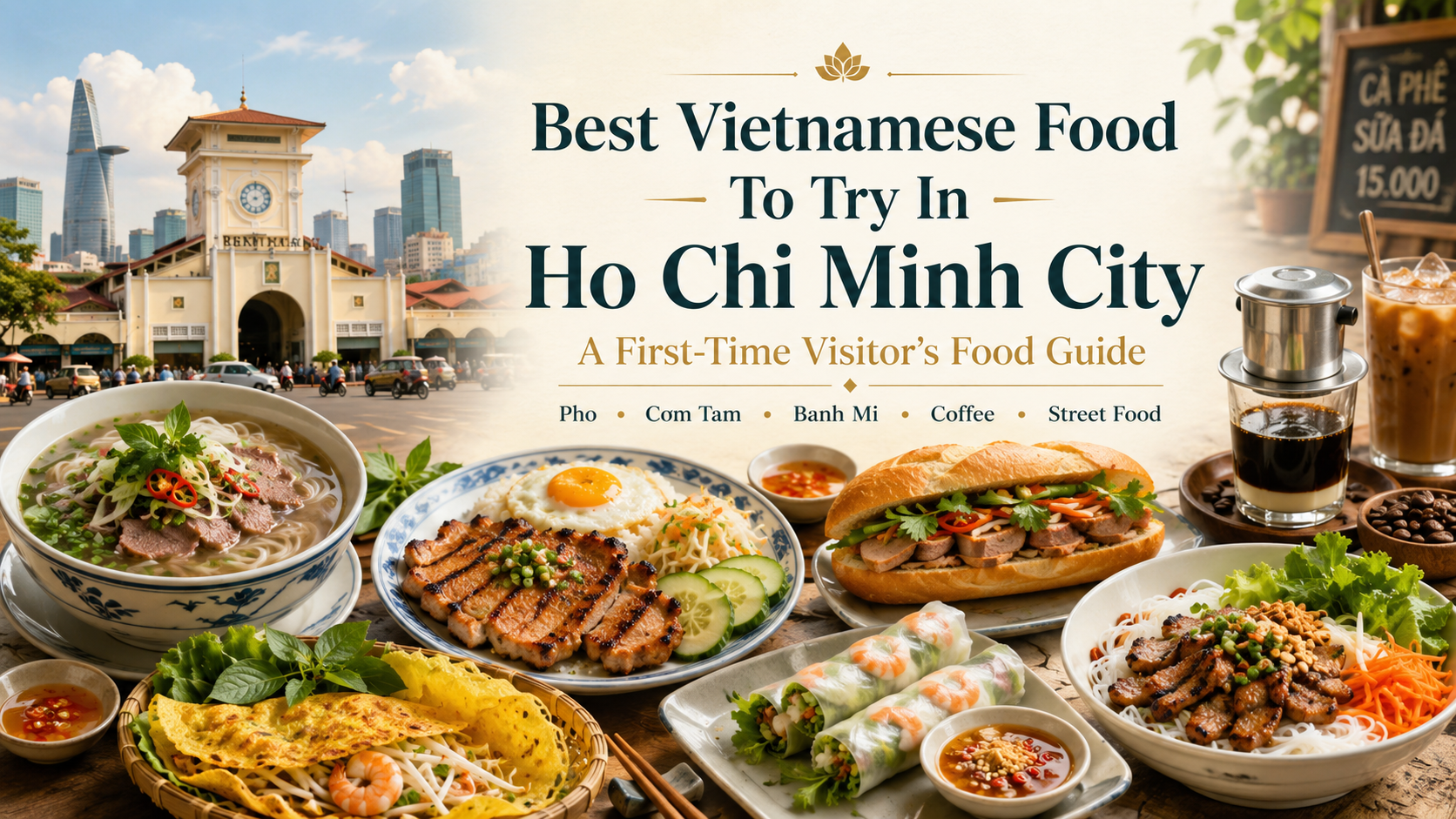
Hello everyone, it’s Fito again! Today I’ll take you on a tour to discover Vietnam’s specialties in Ho Chi Minh City.
The best Vietnamese food in Ho Chi Minh City is not limited to a single famous dish. The city gives first-time visitors a wide food experience: noodle soup, broken rice, grilled pork, fresh herbs, crispy bread, sweet coffee, tropical desserts, and late-night street snacks.
Ho Chi Minh City, still often called Saigon by locals, is one of Vietnam’s most exciting food destinations because it combines southern flavors with dishes from across the country. You can eat a quick bowl of noodles in the morning, drink strong iced coffee at noon, try grilled rice plates for lunch, and end the night with street food under bright city lights.
Mục lục tóm tắt
Why Ho Chi Minh City Is A Great Food City
Ho Chi Minh City is a great food city because it is fast, diverse, affordable, and deeply connected to daily life.
Food is everywhere: markets, sidewalk stalls, family restaurants, coffee shops, apartment cafés, night streets, and modern dining spaces. The city’s food culture works well for international visitors because many dishes are easy to approach, customizable, and full of fresh ingredients.
Southern Vietnamese food often tastes slightly sweeter, brighter, and more herb-forward than food in northern or central Vietnam. You will notice fish sauce, lime, chili, pickled vegetables, grilled meat, fresh herbs, and rice noodles appearing often across different meals.
Pho: Vietnam’s Most Famous Noodle Soup
Pho is a Vietnamese noodle soup made with rice noodles, clear broth, herbs, and beef or chicken.
For first-time visitors, pho is the safest place to start because it is familiar, comforting, and easy to find. A typical bowl includes flat rice noodles, sliced beef or chicken, onion, herbs, bean sprouts, lime, and chili. In Ho Chi Minh City, pho is often served with a generous plate of herbs and sauces, allowing you to adjust the flavor yourself.
Try pho for breakfast or lunch. Add lime for brightness, herbs for aroma, and chili only if you enjoy heat. Do not add every sauce immediately. Taste the broth first, then season slowly.
Com Tam: Southern Vietnam’s Signature Broken Rice
Com tam is broken rice served with grilled pork, egg, pickles, scallion oil, and fish sauce.
This dish is one of the most important foods to try in Ho Chi Minh City because it represents southern Vietnamese comfort food. The rice grains are smaller and softer than regular rice, while the grilled pork gives the plate a smoky, savory flavor.
A common order is cơm tấm sườn bì chả, which usually includes grilled pork chop, shredded pork skin, steamed egg meatloaf, pickled vegetables, and sweet-savory fish sauce. The best way to eat it is to pour a little fish sauce over the rice, then mix each bite with pork, egg, and pickles.
Com tam is ideal for lunch because it is filling, flavorful, and widely available.
Banh Mi: The Vietnamese Baguette Sandwich
Banh mi is a Vietnamese sandwich made with a crispy baguette, savory fillings, pickled vegetables, herbs, chili, and sauce.
This dish is perfect for first-time visitors who want something quick, affordable, and easy to carry. The bread is light and crisp, while the fillings can include pork, chicken, pâté, egg, sausage, grilled meat, or vegetarian ingredients.
A classic banh mi usually combines richness, crunch, acidity, herbs, and heat in one bite. Ask for less chili if you are sensitive to spice. Banh mi works well for breakfast, a light lunch, or a late-night snack after exploring central Ho Chi Minh City.
Bun Thit Nuong: Grilled Pork Noodles With Fresh Herbs
Bun thit nuong is a dry rice noodle bowl with grilled pork, herbs, vegetables, peanuts, and fish sauce.
This dish is a strong choice for visitors who want something lighter than rice but still filling. The bowl usually includes cold rice noodles, warm grilled pork, lettuce, cucumber, herbs, pickled carrots, crushed peanuts, and nước chấm, a Vietnamese dipping sauce made with fish sauce, sugar, lime, garlic, and chili.
The contrast makes the dish memorable: warm meat, cool noodles, crunchy peanuts, fresh herbs, and sweet-salty sauce. Mix the bowl before eating so every bite has balance.
Hu Tieu: A Southern Noodle Dish Worth Discovering
Hu tieu is a southern-style noodle dish often served with pork, seafood, herbs, and a clear, savory broth.
First-time visitors often know pho before arriving in Vietnam, but hu tieu feels more local to the southern food experience. It can be served as soup or dry noodles with broth on the side. The texture is slightly different from pho, and the flavor is usually lighter, cleaner, and sometimes slightly sweet.
Hu tieu is a good breakfast or lunch dish. It is especially useful for visitors who enjoy noodle soups but want to try something beyond the most famous Vietnamese option.
Goi Cuon: Fresh Spring Rolls For A Lighter Bite
Goi cuon are fresh Vietnamese spring rolls wrapped in rice paper with shrimp, pork, noodles, herbs, and vegetables.
This dish is light, fresh, and easy for international visitors to enjoy. The rolls are not fried, so they taste clean and refreshing. They are usually served with peanut sauce or fish sauce-based dipping sauce.
Goi cuon is a good choice between meals or as part of a larger street food route. It also works well for travelers who want something fresh after several grilled or fried dishes.
Banh Xeo: Crispy Vietnamese Pancake
Banh xeo is a crispy Vietnamese pancake filled with pork, shrimp, bean sprouts, and herbs.
The pancake gets its yellow color from turmeric, not egg. To eat it properly, break off a piece, wrap it with lettuce and herbs, then dip it into fish sauce. The result is crispy, fresh, savory, and slightly sweet.
Banh xeo is best eaten with friends because the portions can be large. It is also a good dish to try with a local guide because the wrapping method may feel unfamiliar the first time.
Vietnamese Coffee: Strong, Sweet, And Essential
Vietnamese coffee is an essential part of the Ho Chi Minh City food experience.
The most popular choice is cà phê sữa đá, iced coffee with condensed milk. It is strong, sweet, and refreshing in the city’s warm weather. If you prefer a softer flavor, try bạc xỉu, which has more milk and less coffee intensity.
Coffee culture in Ho Chi Minh City is not only about the drink. It is about sitting, watching the street, meeting friends, working on a laptop, or resting between meals. Try at least one sidewalk coffee and one modern café to understand both sides of the city.
Che: Vietnamese Sweet Soup And Dessert
Che is a Vietnamese dessert category that includes sweet soups, jellies, beans, coconut milk, fruit, and ice.
For first-time visitors, che is a fun way to try local dessert culture. Some versions are creamy and rich, while others are light and fruity. Common ingredients include mung beans, black beans, lotus seeds, grass jelly, tapioca pearls, coconut milk, and tropical fruit.
Che is especially enjoyable in the afternoon or after dinner. Order a mixed version if you want to try several textures in one cup.
What Should First-Time Visitors Eat First?
First-time visitors should start with pho, com tam, banh mi, bun thit nuong, and Vietnamese coffee.
These dishes give you a clear introduction to Vietnamese food without requiring too much adjustment. After that, add hu tieu, goi cuon, banh xeo, and che for a broader experience.
A simple first-day food route can look like this:
• Morning: Pho and Vietnamese iced coffee
• Lunch: Com tam with grilled pork
• Afternoon: Goi cuon or che
• Evening: Bun thit nuong or banh xeo
• Late Night: Banh mi or a street food snack
This route gives you noodles, rice, bread, herbs, coffee, and dessert in one day.
Food Safety Tips For International Visitors
Food safety in Ho Chi Minh City is easier when you choose clean, busy places and eat freshly prepared dishes.
Look for restaurants or stalls with many local customers, visible cooking areas, and high food turnover. Avoid raw ingredients from places that look quiet or poorly maintained. Drink bottled water, carry hand sanitizer, and start with mild spice before adding more chili.
Street food is part of the city’s identity, but your first experience should be guided by common sense. Busy stalls, hot food, and simple dishes are usually safer choices for new visitors.
Where To Stay For A Good Food Trip
A central location makes your Ho Chi Minh City food trip easier because many food streets, cafés, markets, and nightlife areas are close together.
Staying near Bến Thành Ward, Sài Gòn Ward, or Cầu Ông Lãnh Ward gives you convenient access to many classic food experiences in the former District 1 area. For guests who want a serviced apartment with more privacy, Compass Stay in Cầu Ông Lãnh Ward can work well as a comfortable base with kitchen and laundry convenience.
If you want a smoother food experience, Fito Thinh can help design a private food route based on your taste, schedule, spice tolerance, dietary needs, and accommodation location. I offer a range of services; feel free to contact us if needed, and we will provide you with the best possible advice:
- Link book via OTA App: Booking, Agoda, and Airbnb
- Book directly with us:
- Hotline Compass Stay: +8470 404 8184 (Hotline, Zalo, Whatsapp)
- Hotline Fito Thinh: +84 905 835 538 (Hotline, Zalo, Whatsapp)
- Apply directly via https://www.vietnam-visa.in/apply-vietnam-visa/
- Book a flight to Vietnam via Agoda
- Booking Hotel Việt Nam
The best Vietnamese food to try in Ho Chi Minh City tells the story of the city through rice, noodles, herbs, grilled meat, coffee, and street life.
Start with familiar dishes like pho, com tam, and banh mi, then explore deeper local flavors through hu tieu, bun thit nuong, banh xeo, goi cuon, che, and Vietnamese coffee. Eat slowly, ask questions, and leave space for unexpected discoveries.
Ho Chi Minh City is not only a place to see. It is a place to taste, one meal at a time.