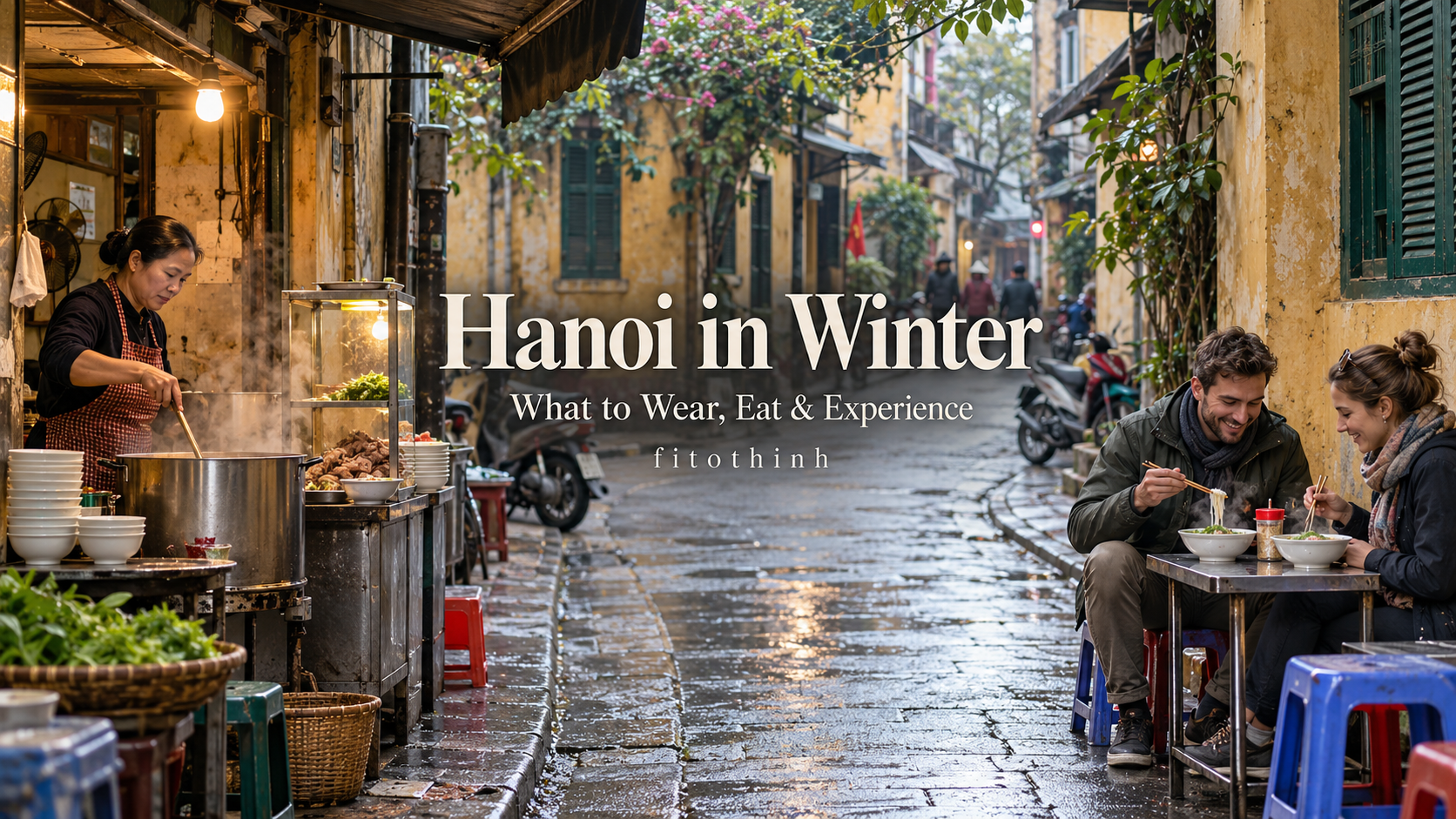
Hanoi in winter can surprise travelers who pack for tropical Vietnam. Breakfast arrives steaming, the lake disappears into a soft grey distance, and people sit beside open-front shops with their jackets still zipped. Your weather app says 14°C. Your cold hands have a different opinion.
The temperature alone does not explain the experience. Wind, drizzle, damp clothing and hours without much sunshine can make an otherwise manageable day uncomfortable. A café break may mean shelter rather than a heated room. That matters when you are planning clothes, accommodation and how long to stay outside.
But prepare properly and winter becomes a rewarding time to explore. Walk between bowls of noodles, pause over hot coffee, spend longer in museums and let the city’s daily routines provide the scenery. You do not need perfect blue skies for a good Hanoi day.
This guide explains what to wear, which foods suit the season, how to adapt a wet-day itinerary and when Northern Vietnam side trips deserve a rethink.
Mục lục tóm tắt
Is Hanoi Actually Cold in Winter?
Yes, Hanoi can feel genuinely cold, especially during a cold-air outbreak. Vietnam Tourism’s climate guide notes lows around 10°C in colder periods from late December into March. That is a cold-weather reference, not the temperature you should expect all day throughout winter.
Damp weather becomes uncomfortable when shoes or clothing get wet, wind reaches through thin layers and you spend hours outside. Cloud also removes the warming effect of direct sun. Humidity alone is not a formula for subtracting imaginary degrees from the forecast.
A long breakfast in an open doorway feels different from stepping between centrally heated buildings. Bring enough clothing for that difference. Snow in central Hanoi is not a normal winter expectation; mountain snowfall elsewhere does not make Hanoi a snow destination.
When Is Winter in Hanoi?
For trip planning, focus on December, January and February, with cool periods continuing into March.
If you are flying onward to Ho Chi Minh City or a southern beach, keep some warm-weather clothes too. Pack for your route, not simply the word “Vietnam.”
Hanoi Winter Weather by Month
| Month | General feel | Main advantage | Main caution |
|---|---|---|---|
| December | Increasingly cool | Walking and festive streets | Colder evenings and late-month changes |
| January | Strongest winter character | Hot food, cafés and culture | Cold waves |
| February | Cool, sometimes damp or drizzly | Pre-Tet and Tet experiences in relevant years | Holiday logistics and variable weather |
| Early March | Transition toward milder weather | Neighborhood exploring | Cool, damp spells can linger |
December
Leave room for Christmas decorations around churches and shopping streets, alongside ordinary city life. Carry your evening layer even if lunch feels comfortable.
January
January is usually among the coldest parts of the year. Make food and indoor culture central to your plans, with outdoor walks fitted around conditions. For the wider journey, read Vietnam in January: Weather & Best Places to Visit.
February
Drizzle and damp conditions can become more noticeable, but it does not rain every day. Tet may change your itinerary more than the weather; check the dates for your year rather than assuming February always follows one holiday pattern.
Winter 2026–27 Outlook
Forecast checked 31 October 2026: NCHMF’s 15 October seasonal bulletin for November 2026–April 2027 projects average temperatures generally 0.5–1.5°C above the long-term average in December–January, and 1–2°C above average across much of the country in February–April.
Cold-air activity is expected to be weaker overall, with fewer severe-cold days across the North and North Central region. However, the bulletin retains the possibility of short severe-cold episodes with sharp temperature drops.
Plan for a milder season on average, not guaranteed warm days. Recheck the local forecast several days before arrival and short-range warnings before excursions.
What to Wear in Hanoi in Winter
Build Adjustable Layers
Start with a T-shirt or long-sleeved top, add a sweater or fleece, then a medium jacket or light insulated outer layer.
Long trousers are more useful than shorts for ordinary sightseeing. Jeans work in dry conditions; quick-drying travel trousers are easier to manage after drizzle.
Choose Your Jacket for the Forecast
For many city days, a layered outfit with a wind-resistant jacket is practical. During a strong cold spell, use warmer insulation, a scarf and warm socks. A beanie or light gloves can help on early departures or motorbike rides.
An expedition coat is usually excessive for central Hanoi.
Keep Your Feet Dry
Wear comfortable closed shoes with dependable grip and some resistance to light rain. Wet paving and polished entrances can be slippery. Dry socks are worth carrying on a long excursion; expensive hiking boots are unnecessary for city streets unless the rest of your route needs them.
Bring Simple Rain Protection
A compact umbrella works for ordinary drizzle. A light waterproof shell is more useful when wind makes an umbrella awkward. Neither replaces a warm layer underneath.
| Item | Usually useful? | Why |
|---|---|---|
| Medium jacket | Yes | Morning and evening comfort |
| Sweater or fleece | Yes | Adjustable warmth |
| Long trousers | Yes | Everyday walking |
| Closed shoes and dry socks | Yes | Damp streets and cold feet |
| Compact umbrella or rain shell | Useful | Drizzle and wind |
| Scarf | Useful | Extra warmth without bulk |
| Thermals, beanie and gloves | Optional | Cold spells, personal comfort or highlands |
| Heavy expedition coat | Usually unnecessary | Assess the actual itinerary first |
| Shorts and swimwear | Mainly for onward travel | Southern destinations or suitable hotel facilities |
Add a day bag, portable charger and lip balm or moisturizer if you use them. The Vietnam packing guide helps with the wider trip, but northern winter needs its own layers. If you underestimate the cold, buy a sweater or scarf locally; prepare more carefully before leaving for the highlands.
Does Your Hanoi Hotel Need Heating?
If you are sensitive to cold, confirmed room heating is worth prioritizing. Ask whether the air conditioner has a working heat mode, whether extra blankets are available and whether hot water is reliable. “Air-conditioned room” does not answer the heating question.
Look through recent reviews for repeated comments about cold rooms, draughty windows or inconsistent showers. Check lift access if stairs are difficult.
Restaurants and cafés also vary. Indoor seating can still be close to open doors, so keep a layer handy during meals.
What to Eat in Hanoi in Winter
Phở: Start With a Hot Breakfast
Choose beef or chicken pho at a neighborhood shop and give yourself time to eat it hot. On a cold morning, the first spoonful of broth is a better introduction to the city than rushing toward a landmark with an empty stomach.
Bún Ốc: A Different Bowl of Comfort
Snail vermicelli soup offers a pleasantly sharp broth, commonly involving tomatoes and vinegar. Try it when you want something different from pho; ask about other toppings rather than assuming every bowl follows one recipe.
Bánh Đúc Nóng: Make Room for an Afternoon Snack
This soft, hot rice-flour dish often includes tapioca flour and toppings such as minced pork, mushrooms and fried shallots, with seasoned fish sauce. It is spoonable comfort food rather than a firm cake. Vietnam Tourism’s Hanoi street-food guide specifically highlights it for cold afternoons.
Lẩu: A Dinner to Linger Over
Hot pot suits a shared evening meal. Choose a broth and ingredients, then let dinner unfold around the pot. It is enjoyed throughout Vietnam, not uniquely in Hanoi. Confirm portions before ordering, especially as a solo diner.
Chả Cá and Bún Chả
Hanoi-style cha ca combines turmeric-seasoned fish with dill and spring onions, accompanied by noodles and typically peanuts; fermented shrimp sauce is a traditional accompaniment. The hot-pan meal gives you a reason to sit down properly after a chilly walk. Vietnam Tourism describes the dish here.
Bun cha is not exclusively winter food, but grilled pork, noodles and dipping sauce make a satisfying lunch in cooler weather.
Bún Thang: A More Delicate Broth
Expect fine noodles with ingredients such as shredded chicken, egg strips and Vietnamese ham. Vietnam Tourism’s Hanoian dishes guide connects its history with making use of Tet leftovers.
Bánh Trôi Tàu and Warm Sweets
Look for glutinous rice dumplings in warm ginger syrup, with fillings that may include sesame or mung bean. Che san, a cassava dessert, is another seasonal possibility. Vietnam Tourism’s winter-food coverage highlights these warming sweets. Ask which desserts are served hot; not every bowl of che is.
Egg Coffee and Hot Tea
Order hot cà phê trứng for rich whipped egg topping over strong coffee. Explore more options in the Vietnamese coffee guide.
| Food or drink | Best moment |
|---|---|
| Pho or bun thang | Breakfast before exploring |
| Bun oc or bun cha | Lunch |
| Banh duc nong | Mid-afternoon warming stop |
| Lau or cha ca | Unhurried dinner |
| Banh troi tau | Cold-evening dessert |
| Hot egg coffee or tea | Between walking blocks |
For allergies or dietary restrictions, ask about broths, sauces and toppings, not only the main ingredient. Fish sauce, shellfish, egg and peanuts appear in several dishes above.
Things That Feel Better in Hanoi in Winter
Old Quarter Walks and Hoan Kiem Mornings
Use a simple rhythm: walk, eat, pause, then walk again. Cooler weather can make exploring more comfortable than summer, provided you do not turn a cold drizzle into an endurance test.
Around Hoan Kiem, look for exercise groups, commuters and breakfast routines. Mist is possible rather than promised. A shorter circuit followed by coffee can be more enjoyable than insisting on a long dawn walk because your itinerary says so.
Café Time Without Guilt
Choose a café near the next part of your route and settle in. Watch deliveries, umbrellas and street activity rather than treating every seated hour as lost sightseeing. Check whether the seating is enclosed before relying on it as a warming break.
Museums and the Temple of Literature
For art, the Vietnam National Fine Arts Museum offers a useful indoor anchor. Its visitor page currently lists Tuesday–Sunday opening, 8:30 a.m.–5 p.m., with Monday closure; reconfirm for holidays.
The nearby Temple of Literature pairs well geographically, but its courtyards are outdoors. Give it the drier part of the day instead of describing it as an all-weather shelter.
Water Puppetry or a Workshop
A water-puppet performance can provide an indoor evening activity; check the actual show schedule before arranging dinner. A cooking or craft class is another option. Ask whether a class includes outdoor market time.
Photograph the Weather You Have
Try food-stall steam, yellow walls under soft light, reflections and café windows. Cloud can suit close street details even when distant views disappoint. Keep electronics dry, ask before close portraits and photograph from a safe place rather than stepping into traffic. Grey skies do not automatically mean picturesque mist—or clean air.
What to Do on a Cold, Wet Day
Start with pho, then spend the morning at the Fine Arts Museum on an opening day. Have lunch nearby and take an unhurried café break. If rain eases, add a short walk; otherwise choose a pre-booked indoor activity or return to your room before dinner.
An evening puppet show followed by hot pot works if timings and appetite fit. Do not add an exposed temple visit simply to keep the day looking busy. Use a car transfer when walking would leave you wet for the rest of the afternoon.
What to Do on a Clear Winter Day
Start at Hoan Kiem, explore a manageable Old Quarter section and stop for lunch. Give the afternoon to the Temple of Literature or a Truc Bach/West Lake neighborhood outing, with transport between areas.
Keep your jacket even if sunshine lets you remove it temporarily. Finish with cha ca or another local dinner.
A Practical 2-Day Hanoi Winter Itinerary
| Day | Morning | Afternoon | Evening |
|---|---|---|---|
| 1: Old Hanoi | Pho, Hoan Kiem and a short Old Quarter walk | Lunch, café and relaxed streets; swap to an indoor activity if wet | Water puppetry if desired, then dinner |
| 2: History and neighborhoods | Temple of Literature in dry conditions | Fine Arts Museum on an opening day; in clear weather, choose Truc Bach instead | Cha ca or hot pot, with a warm dessert if you have room |
Swap the days to suit weather and museum closures. Two or three full city days are a useful first-visit baseline; countryside trips require additional time. The Hanoi three-day itinerary expands the choices without requiring you to fit all of them into this plan.
Are Hanoi Side Trips Worth It in Winter?
Yes, when the experience matches your expectations. Ha Long and Ninh Binh can be excursions; Sa Pa and Moc Chau are better treated as longer extensions.
| Destination | Winter appeal | Main trade-off | Sensible allocation |
|---|---|---|---|
| Ninh Binh | Karsts, boats and less heat | Chilly sitting on water; slippery steps | Full day or overnight |
| Ha Long Bay | Atmospheric seascapes | Limited visibility and cold exposed decks | Full day or overnight cruise |
| Sa Pa | Highland villages and winter scenery | Colder conditions, fog and possible frost/ice | Several days, including travel |
| Moc Chau | Highlands and possible plum blossoms | Bloom timing varies; substantial road journey | Overnight or longer |
Ninh Binh
Ninh Binh’s official destination guide describes cool, drizzly winters. Bring a layer for the boat even if walking feels comfortable. Choose a boat route plus one complementary stop, and skip a steep viewpoint when steps are slippery. See the day trip versus overnight guide for pacing.
Ha Long Bay
Go for the seascape and time aboard rather than a guaranteed swimming holiday. Ask about cabin heating and sheltered seating. Cloud alone need not cancel your trip, but marine warnings, wind and operator instructions matter more than a generic Hanoi forecast.
Sa Pa
Prepare separately for mountain temperatures and visibility. Occasional snow is possible, not guaranteed, and winter is not the season to expect golden rice terraces. Confirm heating, footwear needs and road conditions. If traveling by sleeper train, account for the onward road connection; the Vietnam train guide explains the planning trade-offs.
Moc Chau
Vietnam Tourism’s monthly guide highlights January plum blossoms, but flowering shifts between years and locations. Ask for recent local bloom reports before making flowers the sole reason for the journey.
Hanoi During Tet
Pre-Tet streets can bring peach blossoms, kumquat trees and busy preparations. The early holiday feels different: some commercial streets quieten while places of worship become busy. Confirm restaurant and attraction arrangements individually.
For 2027, the official public-sector holiday is 4–10 February, according to the government holiday notice. Private businesses do not necessarily follow identical closure dates.
Read Traveling Vietnam During Tet: What Tourists Need to Know before booking early-February travel. Reserve essential transport, establish a meal backup and avoid assuming every favorite food stall will be open.
Where to Stay in Winter
The Old Quarter is convenient for food, cafés and short walks, but check noise and vehicle access. Hoan Kiem edges and the French Quarter offer other central bases. Truc Bach or West Lake can suit longer, slower stays, with more transport needed for some central sights.
Use the heating and hot-water checklist above alongside location. Ask whether breakfast is available, whether windows close securely and whether your room requires stairs.
Winter is not universally cheaper. Christmas, New Year, Tet, weekends and individual events affect rates.
Winter Travel for Families, Couples & Solo Visitors
Families benefit from short outdoor blocks, reliable room warmth and meals near the hotel. Couples can build days around food, cafés and a few cultural stops. Solo travelers can explore independently or use a shared excursion for simpler logistics.
For everyone, a taxi, car-based ride-hailing trip or bus may be more comfortable than a motorbike in cold rain. Motorbike passengers need an appropriate helmet and weather protection; this is not a reason for inexperienced visitors to start riding. If air quality affects your plans, check current official/local AQI information before a long outdoor day.
Is Winter a Good Time to Visit Hanoi?
Yes, particularly for food, culture and travelers who enjoy cooler walking weather. Autumn may suit you better if clearer skies and gentle warmth matter most. Winter asks you to accept cloud, adjust outdoor plans and take hotel comfort seriously.
For a national trip, use the Vietnam 10-Day Itinerary or the two-week north-to-south route to balance northern conditions with the rest of your journey.
Common Winter Mistakes
- Arriving with only tropical clothes.
- Assuming a moderate temperature means no jacket.
- Wearing open sandals all day on damp streets.
- Treating air conditioning as proof of heating.
- Planning uninterrupted outdoor sightseeing in drizzle.
- Expecting guaranteed blue skies at Ha Long.
- Expecting golden terraces or guaranteed snow in Sa Pa.
- Ignoring Tet changes to meals and transport.
Fito’s Local Tips for Hanoi in Winter
- Check the evening forecast as well as the daytime high.
- Keep one warm layer in your day bag.
- Carry spare socks on a long countryside outing.
- Make café stops part of the plan.
- Leave appetite for hot snacks beyond pho.
- Choose tomorrow’s outdoor block after checking conditions.
- Confirm separate forecasts for mountains and the bay.
- Leave room to enjoy the city without chasing sunshine.
FAQ
Is Hanoi cold in winter?
It can be, especially during cold spells and long damp days outdoors. Layers make a considerable difference.
What is the coldest month in Hanoi?
January is generally among the coldest months, although individual cold waves vary by year.
How cold does Hanoi get in January?
Colder periods can bring lows around 10°C. That is neither a guaranteed daily reading nor an absolute minimum.
Does it snow in Hanoi?
Snow is not a normal central-Hanoi winter experience. Do not plan a city trip expecting it.
What should I wear in Hanoi in winter?
Long trousers, closed shoes, a sweater and an adjustable jacket, with rain protection and extra warmth when needed.
Do I need a winter coat?
Bring a useful jacket. A warmer insulated coat may suit a cold spell or highland extension; expedition clothing is usually unnecessary for the city.
Does Hanoi get winter rain?
Yes. Light rain and drizzle can occur, particularly during damp transitional periods, but rain is not constant.
Do Hanoi hotels have heating?
Some do. Confirm the specific room’s heating system, blankets and hot water before booking.
Which winter foods should I try?
Pho, bun oc, banh duc nong, hot pot, cha ca and warm ginger-based desserts, with hot coffee or tea between walks.
Is Ha Long Bay worth visiting in winter?
Yes if you accept variable visibility and cooler decks. Check marine conditions and choose a suitable cruise.
Is Sa Pa colder than Hanoi?
Yes. Mountain conditions require separate clothing and weather checks, particularly during severe cold.
Hanoi Is Better in Winter When You Dress for It
Hanoi in winter rewards a little preparation: dry feet, adjustable layers, a comfortable room and permission to change the day’s rhythm. Hot food, slow coffee and street life remain compelling even when distant views disappear.
If you are combining Hanoi with Ninh Binh, Ha Long, Sa Pa or Moc Chau, ask Fito to help plan your winter route around your dates, interests and current conditions. Choosing the right extension is more useful than booking every famous destination before seeing the forecast.
Book directly with us:
- Hotline Compass Stay: +8470 404 8184 (Hotline, Zalo, Whatsapp)
- Hotline Fito Thinh: +84 905 835 538 (Hotline, Zalo, Whatsapp)
- Instagram: compass.stay
- Apply directly via https://www.vietnam-visa.in/apply-vietnam-visa/
- Book a flight to Vietnam via Agoda
- Booking Hotel Việt Nam