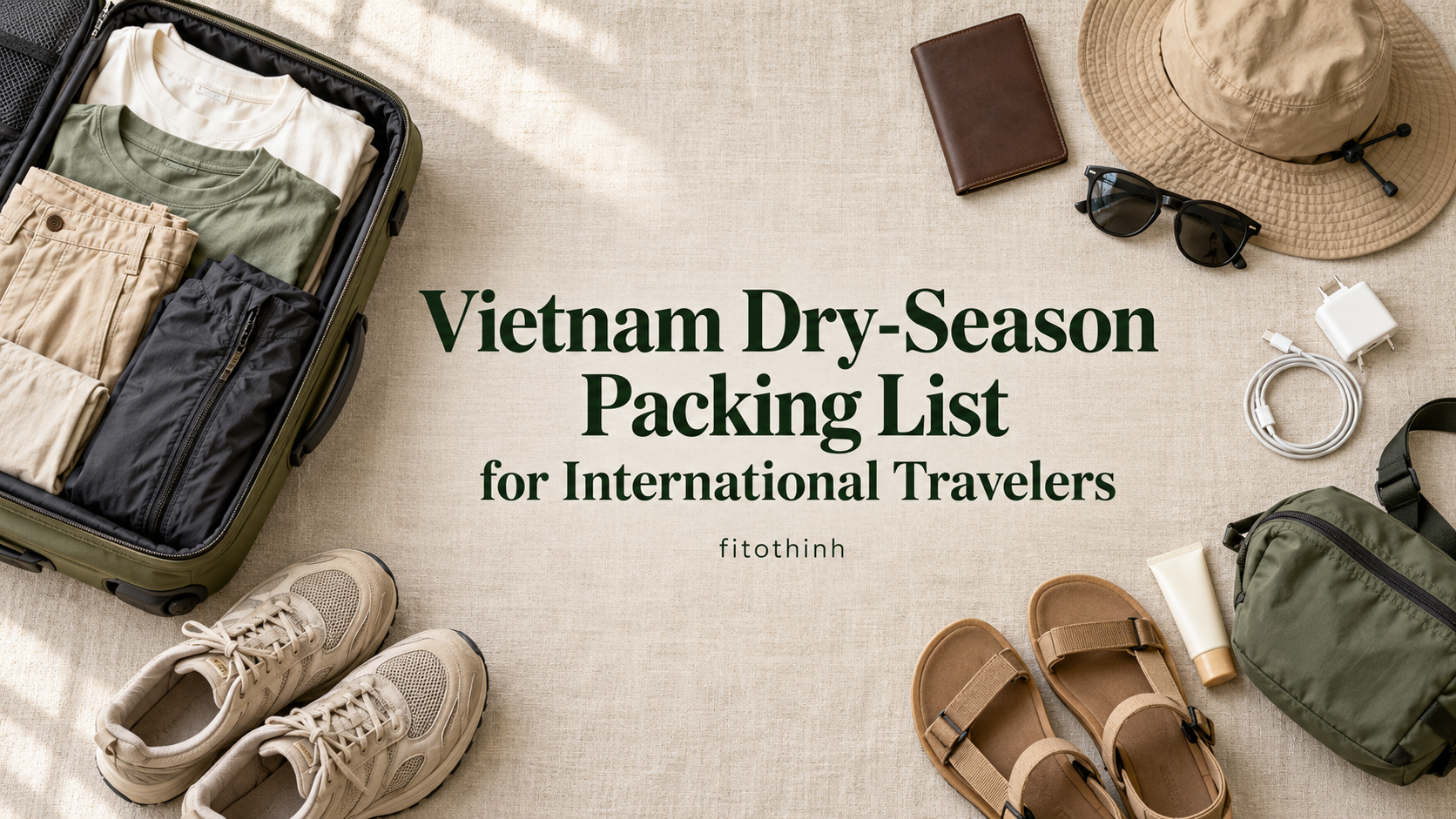
Your Vietnam packing list can go wrong in two directions. Bring only shorts and you may spend your first cool Hanoi morning looking for a jacket. Bring three jackets and hiking boots for a Saigon-and-beach holiday and you will spend the trip wondering why your suitcase is so heavy.
Both problems start with packing for an idea of Vietnam instead of the route you have booked. A northern mountain stop, a temple visit in Hue and an afternoon in Ho Chi Minh City need different things—but not three separate wardrobes.
Pack light, but pack for multiple climates. For most trips, that means versatile clothes, comfortable shoes, a few useful layers and laundry halfway through.
This guide explains what changes between the north, central coast and south, what belongs in your carry-on, and which extras are worth bringing for mountains, beaches and overnight journeys. You will also find a two-week checklist you can adapt without packing every item that has ever appeared on a travel blog.
Mục lục tóm tắt
What Does Vietnam’s Dry Season Actually Mean?
Vietnam does not have one national dry season. November–April is a common travel window, but it does not bring the same conditions everywhere.
Vietnam Tourism’s climate guide describes cooler northern winters, later rainfall around Hue and Hoi An, and generally hot, drier conditions in the south around December–April.
| Region | Broad seasonal pattern | Packing priority |
|---|---|---|
| Northern cities | Autumn can be mild; winter cool, sometimes cold and damp | Trousers, layers, forecast-appropriate jacket |
| Northern mountains | Much colder than lowland cities in winter | Insulation, wind protection, closed shoes |
| Central coast | Late-year rain can extend into early-year travel | Quick-drying clothes, rain layer |
| Ho Chi Minh City and Mekong | Warm year-round; generally drier December–April | Breathable clothes, sun protection |
| Southern islands | Often favorable for winter beach trips; showers remain possible | Swimwear, sun protection, small rain option |
These are planning patterns. Check each destination about a week before departure, then again before changing regions. Our Vietnam in November guide explains the regional differences for that month.
Vietnam Packing List at a Glance
For a typical city-and-countryside holiday, start here:
- Clothing: versatile tops and bottoms for five to seven days, underwear, sleepwear, a long-sleeve shirt and suitable layers.
- Footwear: comfortable walking shoes plus sandals or easy slip-ons.
- Weather: compact rain protection, hat, sunglasses and sunscreen.
- Health: personal medication, repellent and a small toiletry kit.
- Electronics: phone, charger, suitable adapter and airline-compliant power bank.
- Documents: passport, entry documents where required, insurance, bookings and secure backups.
- Bags and money: one manageable main bag, one small day bag, payment cards and modest backup cash.
Add trekking equipment or beach extras only when your itinerary needs them.
How Many Clothes Do You Need for Two Weeks?
You do not need 14 complete outfits. Pack approximately five to seven days of clothes and plan to wash them during the trip.
Choose tops that work with several bottoms. Lightweight trousers can cover city sightseeing, transport days and religious sites. An overshirt can add sun coverage or make air-conditioned transport more comfortable.
Quick-drying fabrics help when laundry time is limited, but you do not need an entirely technical wardrobe. Bring clothes you already enjoy wearing and shoes you have already walked in.
Packing for Hanoi and Northern Vietnam
Hanoi and Ninh Binh
Start with breathable tops, long trousers, a sweater and closed walking shoes. Choose the jacket after checking your dates: Hanoi can have winter lows around 10°C, although that does not describe every day.
For an autumn visit, a light jacket may be enough; colder forecasts justify more warmth. Try your layers together before packing rather than bringing several unrelated coats.
For Ninh Binh boat rides and countryside sightseeing, keep sun and rain protection in your day bag.
Sapa, Ha Giang and Higher Elevations
Check the mountain destination separately from Hanoi. Add an insulating layer, suitable jacket, long trousers, socks and closed shoes. A beanie or gloves may earn their place during a cold spell; they are unnecessary for a southern-city-only trip.
For mountain motorbike travel, wind exposure matters. Bring full-length clothing, wind and rain protection, and appropriate riding safety gear. Ordinary trainers and a fashionable jacket are not substitutes for motorcycle protection. Confirm what the operator supplies before departure.
Packing for Hue, Da Nang and Hoi An
Use lightweight everyday clothes, an overshirt and a packable rain jacket as your starting point. Choose footwear that handles walking and dries reasonably quickly.
Do not build a central-coast wardrobe around guaranteed beach days. Include swimwear if you expect to use it, but make your normal sightseeing clothes the priority.
Check conditions again shortly before traveling here. During serious rain or storm warnings, changing the itinerary is more useful than buying stronger rain gear. Follow NCHMF’s official weather updates and advice from your accommodation or transport operator.
Packing for Ho Chi Minh City and the Mekong Delta
For Saigon, prioritize lightweight tops, shorts or loose trousers, walking shoes, a hat and sun protection. A thin long-sleeve shirt is useful when you move between sunny streets, cool interiors and cultural sites.
City walking demands more from footwear than moving between a hotel room and a pool. Dress for the afternoon you actually plan: several hours around museums and neighborhoods deserve supportive shoes.
For the Mekong Delta, add repellent, secure footwear for stepping onto boats, and a small pouch to protect electronics from splashes. A reusable bottle is helpful where safe drinking-water refills are available; do not fill it with untreated tap water.
What to Pack for Vietnam’s Beaches
Bring swimwear, a light cover-up, sandals, a hat, sunglasses and sunscreen.
Check whether your accommodation supplies beach towels before packing one. For boat trips, a small waterproof pouch may be enough; you do not automatically need a large dry bag.
If snorkeling or diving is booked, follow the operator’s equipment list and confirm what is included. Keep off coral, and use swimwear at the beach or pool rather than as your everyday town outfit.
What Should You Wear at Temples in Vietnam?
Vietnam Tourism’s dress guidance recommends covering shoulders and knees at religious sites and the Ho Chi Minh Mausoleum, and removing hats inside temples or pagodas.
Pack one reliable combination: a sleeved top with lightweight trousers or a skirt covering the knees. Follow any stricter signs or staff instructions at the entrance.
An overshirt in your day bag helps with spontaneous visits. A scarf may be useful, but do not depend on a loosely wrapped scarf as your only compliant outfit. Shorts are fine for many ordinary sightseeing situations; religious sites require a different choice.
What Shoes Should You Pack for Vietnam?
Most first-time visitors need two pairs.
| Pair | Best use | What to look for |
|---|---|---|
| Walking shoes or lightweight trainers | Cities, airports, stairs, longer walks | Familiar fit, support, useful tread |
| Sandals or easy slip-ons | Casual outings, accommodation, beaches | Comfortable straps and a stable sole |
At Hang Mua in Ninh Binh, choose shoes with grip for the stone steps and take extra care when wet. Heavy mountaineering boots are unnecessary for a normal sightseeing visit.
For an actual trek, ask the guide about terrain, mud and expected conditions. Trail shoes or boots may then be appropriate. Flip-flops are useful, but they should not be your only footwear for steep stairs or long walking days.
Sun Protection and Light Rain Gear
Bring sunscreen, a hat and sunglasses, and use clothing and shade as additional protection. Cooler-feeling air does not remove the need for sun protection. CDC guidance recommends combining these measures rather than relying on sunscreen alone.
Follow the product’s application instructions and carry enough for the first part of your trip. Sunscreen is available in major cities and tourist areas; bring your usual supply if you need a particular allergy-safe formula.
Yes, pack rain protection during the dry season. A compact jacket or umbrella and a small electronics pouch are generally enough for everyday city travel. Choose more substantial equipment only for activities that require it.
NCHMF outlooks have explicitly recognized out-of-season rain in the Central Highlands and south. The practical lesson is simple: a drier period is not a promise of zero rain.
Mosquito and Health Essentials
Pack a suitable insect repellent and follow its label. Lightweight long sleeves and trousers are useful for countryside stays and outdoor time. Dry-season travel is not a reason to ignore bite prevention; CDC’s travel guidance explains appropriate precautions.
Keep your health kit small and personal: regular medication, basic dressings, and familiar essentials recommended for your needs. Carry enough prescribed medicine for the journey and a reasonable delay buffer, with original packaging and documentation where required.
Check Vietnamese rules before traveling with controlled or unusual medicines. For vaccines, pregnancy, chronic conditions or destination-specific health questions, consult a clinician or official travel-health service. A packing checklist cannot determine your medical requirements.
Electronics and Charging
A phone, charging cable, wall charger and compliant power bank cover many travelers’ needs. Add headphones, a camera or a laptop only if you will use them.
Do You Need a Vietnam Travel Adapter?
Socket fittings vary. Bring a reputable adapter suitable for Vietnam and your devices rather than assuming every hotel socket will accept your plug.
Vietnam’s supply is 220V, 50Hz, according to Electrical Safety First. A plug adapter changes the connection, not the voltage. Check each device’s input label; a dual-voltage charger is different from a single-voltage hair appliance. Preserve any required earth connection and stay within the adapter’s rating.
Power Banks: Check Before Every Flight
Keep power banks in cabin baggage, not checked luggage, and remove them if your cabin bag is taken for hold storage. Protect them from damage and short circuits, with capacity markings readable.
Checked 23 September 2026: Vietnam Airlines’ current policy allows a maximum of two personal power banks, subject to its battery conditions. It requires them to remain visible and accessible rather than inside overhead luggage, and prohibits using or charging them during the flight.
Check your operating airline’s current capacity, quantity and stowage rules, including connecting flights. Do not assume another carrier has identical conditions. Charge your phone before boarding.
Phone Preparation
Check that your phone supports your planned SIM or eSIM and is unlocked where necessary. Download maps, bookings and translation tools before you need them. Keep emergency contacts accessible offline without leaving sensitive document copies in publicly shared folders.
Documents, Money and Your Everyday Bag
Before departure, confirm passport validity and whether your nationality and itinerary require a visa or qualify for visa-free entry. Use the Vietnam Immigration Department’s official portal to reach its current e-visa services. Fito can help with visa preparation if you need assistance; approval remains with the authorities.
Keep your passport, required entry documents, insurance details and first accommodation address accessible. Carry one or two payment cards, some backup cash and small Vietnamese-dong notes after arrival. Keep an emergency payment option separately.
Choose a small backpack, sling or crossbody bag for water, sunscreen, a rain layer and essentials. Secure valuables in busy areas and near traffic.
Suitcase or Backpack for Vietnam?
A suitcase works well with airport transfers, city hotels and longer stays. Its disadvantages appear at stairs, uneven pavements and small properties without lifts.
A travel backpack keeps your hands free and can make repeated transfers easier, but carrying weight in the heat is not everyone’s preference.
For most 10–14-day trips, aim for one manageable main bag plus one small day bag. Test whether you can lift the packed bag comfortably.
Check the allowance on each flight booking. A generous international allowance does not automatically apply to a separately purchased domestic ticket. Size, weight and included checked baggage depend on the operating carrier and fare.
Pack Less: Plan Your Laundry
Tourist destinations commonly offer hotel laundry, local wash-and-fold services or laundromats. Ask about price, turnaround and drying before handing over everything you own.
Schedule laundry while you have at least a little time in one place, keeping a clean outfit aside. Hand-washed clothes may dry slowly in damp weather or poorly ventilated rooms.
If considering Compass Stay in Ho Chi Minh City, ask which apartment has an in-unit washing machine and what drying facilities are available. That detail can be more useful halfway through a trip than another outfit in your suitcase.
Toiletries and What You Can Buy Locally
Bring your toothbrush, preferred skincare, deodorant, contact-lens supplies and other personal essentials. Carry menstrual products or specialist toiletries from home when brand or fit matters.
Common shampoo, soap, umbrellas and basic travel items are available in major Vietnamese cities. You do not need a full-size bottle of everything. Follow the liquid rules for your departure and transit airports, including any arrangements for medicines.
Bring specialist footwear in your size, prescription glasses and essential medical supplies with you. Shops are useful for replaceable basics; searching for an exact prescription product should not become your first-day activity.
Sample Vietnam Packing List for Two Weeks
This baseline suits Hanoi → Ninh Binh → Central Vietnam → Ho Chi Minh City → Mekong Delta, as in our two-week Vietnam itinerary. Quantities include what you wear in transit.
Clothing and Shoes
- 4–5 lightweight tops.
- 1 lightweight long-sleeve shirt or overshirt.
- 2 lightweight long bottoms, including a temple-appropriate option.
- 1–2 shorts or other preferred casual bottoms.
- 5–7 days of underwear and enough socks for your activities.
- Sleepwear.
- 1 sweater or fleece for a mixed-climate route.
- 1 forecast-appropriate jacket; a suitable rain shell may also provide wind protection.
- Walking shoes and one pair of sandals or slip-ons.
- Swimwear only if needed.
Daily Essentials
- Hat, sunglasses, sunscreen and repellent.
- Compact rain protection and a small waterproof pouch if useful.
- Personal medication and compact toiletries.
- Phone, charger, suitable adapter and compliant power bank.
- Passport, entry documents, insurance, cards and secure backups.
- Small day bag and optional bottle for safe-water refills.
Modify, rather than simply add: increase warmth for northern winter or mountains; swap ordinary walking shoes for appropriate trail footwear if trekking; reduce city clothing for a beach-heavy stay. Check specialist operators’ lists before duplicating supplied equipment.
Carry-On Essentials for Your Flight to Vietnam
Keep these with you if your main bag is checked:
- Passport, entry paperwork, travel details and accommodation address.
- Money, cards, valuables and important contact information.
- Medication and any supporting documentation.
- Phone, charger and power bank under the airline’s rules.
- A change of underwear and basic clothing.
- Essential toiletries within the applicable security rules.
This small reserve helps if checked baggage is delayed.
Pack a Small Bag for Trains and Side Trips
For an overnight train, separate your ticket, passport, toiletries, light layer, earplugs, eye mask, water and valuables. You should not need to open your main suitcase in a shared compartment.
For a Mekong overnight, a change of clothes, toiletries, sun and rain protection, repellent and charging essentials may cover most needs. If returning to the same Ho Chi Minh City accommodation, ask whether secure luggage storage is available; do not assume it is included.
Families can add familiar snacks, compact entertainment and spare clothing. Prioritize each traveler’s actual needs, including supportive footwear and accessible medication, rather than packing according to age stereotypes.
10 Things You Probably Do Not Need to Pack
- Four or five pairs of shoes: two usually cover a standard itinerary.
- A huge towel: check what your accommodation supplies.
- Several heavy jeans: lightweight trousers are easier to rotate and wash.
- Full-size bottles of every toiletry: bring smaller quantities and replenish basics.
- Multiple bulky coats: build a layering system around the forecast.
- Too many dressy outfits: reserve them for actual events or plans.
- Expensive jewelry you will not use: leave unnecessary valuables behind.
- Duplicate electronics: decide whether you need both laptop and tablet.
- A bag of unfamiliar medicines: bring your established essentials and seek appropriate advice.
- Every accessory suggested online: Vietnam does have shops—and your suitcase does have limits.
Common Vietnam Packing Mistakes
Avoid packing only for your arrival city, treating a Hanoi forecast as a mountain forecast, or assuming “dry” means no rain. Other easy mistakes are forgetting temple clothing, packing batteries in checked luggage and discovering domestic baggage restrictions at the airport.
Leave a little space for purchases. Coffee, clothes and snacks have a habit of joining the return journey.
Fito’s Local Tips for Packing Vietnam
- Check every overnight destination before deciding which jacket to bring.
- Wear your walking shoes on a long walk at home first.
- Put the first day’s clothes near the top of your bag.
- Plan laundry before your last clean outfit disappears.
- Keep sun and rain protection in the day bag, not at the hotel.
- Separate a small overnight kit before train journeys or side trips.
- Weigh your bag after adding chargers and toiletries, not before.
- Confirm property amenities rather than packing around assumed equipment.
FAQ
What should I pack for Vietnam during the dry season?
Bring versatile clothes, walking shoes, sun protection, compact rain gear, documents and personal essentials. Adjust warmth to your northern destinations and travel dates.
Do I need a jacket in Vietnam?
Often for a mixed north–south route, especially in northern winter. A southern-only holiday usually needs much less warmth.
Is Hanoi cold during the dry season?
Winter can feel cold, particularly during cold spells. Check the forecast rather than relying on Vietnam’s tropical reputation.
Do I need rain gear in the dry season?
Yes. Keep it compact for ordinary sightseeing; specialized outdoor activities may require different equipment.
Can I wear shorts in Vietnam?
Yes, in many everyday settings. Pack an alternative covering your knees, plus covered shoulders, for religious and other sites with dress requirements.
What shoes should I wear in Vietnam?
Familiar walking shoes are the best starting point. Add sandals, and bring specialist trekking footwear only for a route that needs it.
Do I need mosquito repellent during the dry season?
It is sensible to bring it. Use it according to the label and seek destination-specific health advice where needed.
Can I put a power bank in checked luggage?
No—keep it in cabin baggage and follow the operating airline’s current battery and onboard-use rules.
How many clothes do I need for two weeks?
About five to seven days of versatile clothing works for many travelers who use laundry. Adjust for activity, climate and personal comfort.
Pack for Your Route, Not Just “Vietnam”
A useful Vietnam packing list begins with your destinations: warmth where needed in the north, rain flexibility in the center, and breathable clothes and sun protection in the south. Add temple-appropriate clothing, use laundry and keep your luggage manageable.
If your plans combine northern mountains, Central Vietnam and the tropical south, Fito can help shape a practical route around your dates and pace. Once the itinerary makes sense, packing becomes much easier.
Book directly with us:
- Hotline Compass Stay: +8470 404 8184 (Hotline, Zalo, Whatsapp)
- Hotline Fito Thinh: +84 905 835 538 (Hotline, Zalo, Whatsapp)
- Instagram: compass.stay
- Apply directly via https://www.vietnam-visa.in/apply-vietnam-visa/
- Book a flight to Vietnam via Agoda
- Booking Hotel Việt Nam