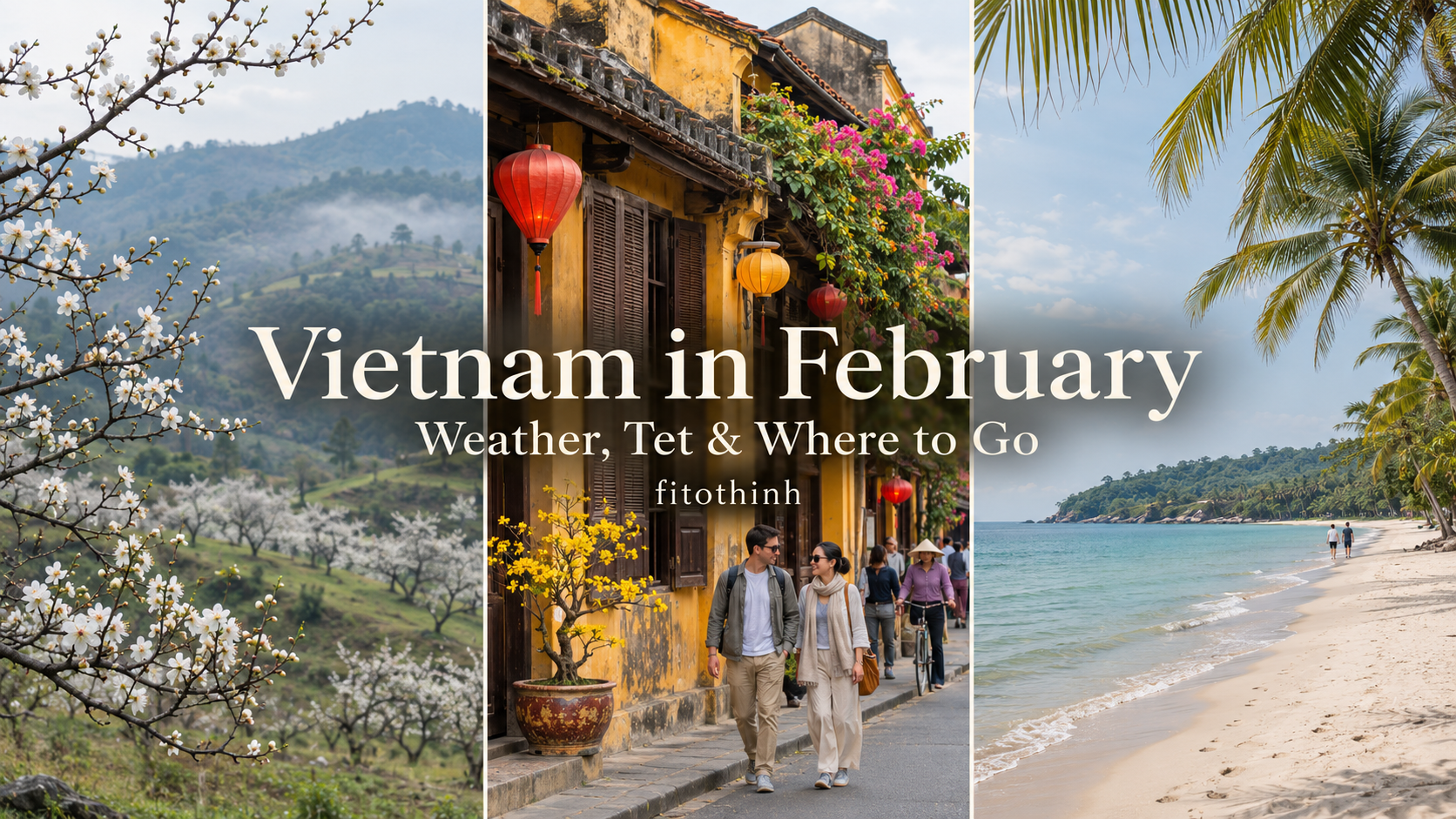
Vietnam in February can deliver mountain blossoms, lantern-lit streets and a beach afternoon within one trip. It can also deliver a closed noodle shop and a very expensive last-minute flight. The difference often comes down to dates.
In 2027, Tết falls in early February. That creates three distinct trips: the preparations before New Year, the family holiday itself and the gradual return to everyday routines afterward.
My recommendation is to choose your holiday base before filling your itinerary with destinations. Then use Vietnam’s regional weather differences to your advantage. You can enjoy northern culture without expecting tropical warmth, and finish in the south without carrying your jacket onto the beach.
Mục lục tóm tắt
Is February a Good Time to Visit Vietnam?
Yes—February is often a strong month for Vietnam, provided your route accounts for both weather and Tết. The south suits winter escapes, Central Vietnam becomes more appealing, and northern spring flowers add a seasonal reason to travel.
It is less straightforward if you want warm swimming weather everywhere or prefer booking intercity transport the night before. Northern winter remains relevant, while holiday operations vary considerably.
If your dates span two months, compare the January travel guide before deciding where to start.
For a first visit with flexible dates, I would usually favor the second half of February for easier logistics. For travelers interested in Vietnamese traditions, arriving before Tết and staying through its opening days can be more rewarding.
February 2027 at a Glance
| Your priority | Starting choice | What to plan around |
|---|---|---|
| Tết atmosphere | Hanoi or Ho Chi Minh City | Restaurant hours and event crowds |
| Tropical beach time | Phú Quốc | Holiday flights and accommodation |
| Mainland beach stay | Nha Trang | Sea conditions and resort demand |
| Heritage and food | Hội An | Transitional weather and opening hours |
| Spring flowers | Mộc Châu or Hà Giang | Current blooms, cold and road visibility |
| Cool highland break | Đà Lạt | Chilly evenings and holiday traffic |
| Simple multi-region travel | Later February | Confirmed transport and realistic transfer days |
These are recommendations by travel style, not a national ranking. A beautiful destination can still be the wrong choice for your available time.
Why February 2027 Is Three Different Travel Periods
Pre-Tết: approximately 1–3 February
This is a good window for preparations: flower shopping, decorated streets and households getting ready. However, the journey home begins before the statutory holiday. A flight on 3 February is not automatically an ordinary weekday booking.
During Tết: 4–10 February
Family celebrations take priority. Some city neighborhoods become quieter, while public displays, temples and holiday destinations attract visitors. Selected tourism businesses continue operating, but normal opening hours cannot be assumed.
Post-Tết: from approximately 11 February
More services return and conventional sightseeing becomes easier. Reopening is gradual rather than a national switch flipped at midnight. Pilgrimage sites and leisure destinations may remain busy.
| Period | Main appeal | Main trade-off | My planning advice |
|---|---|---|---|
| Before | Preparations and flower markets | Homecoming travel demand | Secure onward travel first |
| During | Holiday culture and a different city rhythm | Reduced choices and changed hours | Stay several nights in one base |
| After | Easier routing and spring outings | Uneven reopening and festival crowds | Confirm key visits individually |
Tết 2027 Dates
Public-sector holiday: Thursday, 4 February–Wednesday, 10 February 2027.
Tết Eve: Friday, 5 February.
Mùng 1, Lunar New Year’s Day: Saturday, 6 February.
The announced break runs from the 28th day of the final lunar month through Mùng 5. Private-sector schedules can differ; these dates do not mean every business closes for seven days.
Source: Government of Vietnam’s approved holiday announcement.
February 2027 Weather Outlook
Seasonal outlook checked 8 November 2026: the latest relevant NCHMF bulletin located was issued on 15 October, covering November 2026–April 2027.
- February–April temperatures: generally 1–2°C above the long-term average, locally more.
- February–March rainfall: around normal in the north; approximately 10–20 mm below normal in Central and Southern Vietnam.
- Cold-air activity: weaker overall, but brief strong cold spells remain possible.
- Southeastern Southern Vietnam: heat may start in February, earlier than usual.
- East Sea tropical cyclones: considered unlikely during February–April.
This is a broad outlook, not a daily forecast. Above-average temperatures do not make northern winter reliably warm. Lower rainfall does not mean no showers, and low cyclone likelihood does not guarantee calm seas.
The bulletin schedules its next update by 15 November. Check later seasonal updates, then February’s monthly outlook and short-range forecasts when available.
Vietnam Weather in February by Region
The following summarizes typical conditions, separate from the dated outlook above. Vietnam Tourism’s climate guide is the starting reference; elevation and coastal exposure create local differences.
| Region | General character | Best suited to | Main caution |
|---|---|---|---|
| North | Cool or cold; mist and drizzle possible | Culture, karsts, spring flowers | Cold fronts and mountain fog |
| Central coast | Improving, with uneven seasonal transition | Heritage and selected beaches | Huế can remain cool or wet |
| Central Highlands | Cooler air, generally favorable dry-season travel | Đà Lạt countryside and cafés | Chilly nights |
| South | Usually hot and relatively dry | Cities, rivers and beaches | Heat and holiday demand |
Northern Vietnam
Treat February as winter meeting spring. Flowers can appear while you still need a proper jacket. Make indoor alternatives part of the itinerary.
Central Vietnam
Hội An and Nha Trang become stronger candidates, but the whole coastline does not change season together. Keep Huế’s rain risk and local sea conditions in view.
Southern Vietnam
Plan outdoor activity early, shade around midday and walking later. A southern itinerary is the simpler choice when warmth matters more than seeing every region.
Hanoi in February
Hanoi suits travelers who enjoy a city through its food, neighborhood walks and holiday preparations. Peach blossoms and kumquat displays give the season a recognizable northern character, described in Vietnam Tourism’s Tết guide.
Build days around short walks with café or museum breaks. Ask about room heating and hot water, particularly if traveling with children or older relatives. Check museum hours separately during the holiday.
Keep a small list of confirmed food options near your accommodation. Finding breakfast should be enjoyable exploration, not an endurance event. The Hanoi winter guide covers clothing and comfortable sightseeing in more detail.
Ha Long Bay in February
Choose Ha Long for time on the water, caves and limestone scenery with a winter mood. Do not book it primarily for swimming or guaranteed blue skies.
Before paying, ask the cruise operator about cabin heating, weather-related changes and cancellation terms. A misty photograph can look wonderful; heavy mist can also obscure the landscape you came to see.
Keep the cruise separate from an essential same-day international departure. If clear views are your overriding priority, consider whether a different season would suit you better.
Ninh Binh in February
The official Ninh Bình guide describes cool, drizzly winters. Bring an extra layer for a boat ride: sitting still on the water feels different from walking through town.
Choose scenery, temples and waterways as the main attractions. February is not the classic golden-rice season at Tam Cốc, so use winter landscape expectations rather than harvest photographs.
A day trip can work from Hanoi. An overnight stay gives you more freedom to move a boat ride or viewpoint visit around conditions. Skip slippery exposed steps when the weather turns unpleasant.
Ha Giang and Moc Chau in February
Hà Giang’s February appeal is mountain spring: possible peach and plum flowers against dramatic terrain. Vietnam Tourism identifies February–March with spring blooms. Golden rice and autumn buckwheat belong to a different seasonal story.
Fog, wet surfaces and cold can affect roads. Choose appropriately licensed and insured transport, and match the journey to your experience. Inexperienced riders should not treat a clear morning as permission to tackle unfamiliar mountain roads independently.
Mộc Châu offers a more focused blossom trip. The official destination feature places Na Ka plum-flower visits broadly from mid-January through February. Ask for recent, dated orchard photos before rearranging your route.
Allow an overnight visit rather than treating Mộc Châu as a quick Hanoi detour. Flowers do not read booking confirmations, and their timing changes with the weather.
Hoi An and Da Nang in February
Hội An becomes a more attractive heritage-and-coast combination as the wetter period eases. Plan walking, food and cycling first, with a beach afternoon when conditions cooperate.
February 1 is not a switch from rainy season to summer. Keep a light rain layer and avoid making every enjoyable activity dependent on sunshine.
Đà Nẵng works as a city base or gateway to Hội An, with coastal walks and access to Marble Mountains. During Tết, verify restaurant schedules, Ancient Town access and any advertised cultural program directly. Lantern decorations do not establish an event timetable.
For beach-first travelers, compare this area with Nha Trang or Phú Quốc rather than assuming all three offer the same February experience.
Hue in February
Huế is worth choosing for imperial history, gardens and food. It is less convincing as a weather-only choice.
Official tourism summaries differ slightly: the general climate guide extends cool, rainy conditions through February, while the destination page identifies February–April as a favorable window. Treat February as a transition with possible pleasant days and lingering wet spells.
Keep outdoor tomb visits flexible. You can enjoy Huế without pretending it has the same beach outlook as Nha Trang.
Da Lat in February
Đà Lạt offers a different highland experience from the northern mountains. The official destination guide identifies December–March as a favorable period, while the monthly travel guide highlights February skies and pink cherry blossoms.
Use it for countryside outings, lakeside walks and a slower café day. Pack something warm for evenings. Confirm current bloom conditions rather than selecting an exact street from an undated photograph.
Holiday demand can affect the experience, so compare accommodation location and road access before choosing purely by room photographs. Đà Lạt belongs in the Central Highlands, not a rushed northern mountain circuit.
Nha Trang in February
For a mainland beach break, Nha Trang deserves a serious look. Its shorter late-year rainy period makes February a stronger candidate than a generic “Central Vietnam is wet” label suggests.
Choose Nha Trang when beach time leads the plan. Choose Hội An when architecture and food lead, with swimming as a bonus.
Check the actual beach near your accommodation, not just the distance to the coast. Boat excursions and swimming still depend on waves, wind, flags and operator decisions. Allow several nights so one unsuitable sea day does not define the whole visit.
Ho Chi Minh City and the Mekong in February
HCMC combines urban sightseeing with a useful southern travel base. During early Tết, quieter residential streets can sit surprisingly close to crowded celebration zones. Confirm Nguyễn Huệ display dates and access arrangements when the city publishes them.
Plan a morning walk, a midday break and an evening outing. In the Mekong, choose one area and give it time rather than collecting rushed stops. An overnight stay can suit travelers interested in an early river outing, but confirm market and boat operations during Tết.
Apartment-style accommodation with a kitchenette, fridge and laundry can help during a longer holiday stay. Ask about actual check-in support, housekeeping, nearby food and emergency contact arrangements. A list of amenities does not confirm holiday staffing.
For late flights, check the airport name and code on your ticket, then reconfirm pickup details. Do not book a transfer solely from the label “Ho Chi Minh City.”
Phu Quoc in February
Phú Quốc is a strong choice for finishing the trip with several beach days. Choose accommodation around the kind of stay you want: resort time, accessible restaurants or a quieter setting.
Quiet Saigon does not mean quiet Phú Quốc. Domestic holiday travel can increase competition for flights and preferred rooms. Secure those essentials before adding optional excursions.
Keep boat trips weather-dependent and follow beach safety flags. A sunny balcony does not tell you what conditions are like offshore. Use the Phú Quốc four-day itinerary for a manageable island stay.
Best Places to Visit in Vietnam in February
| Trip style | Best-fit combination | What I would leave out |
|---|---|---|
| First-time overview | Hanoi, Hội An, HCMC and one beach | A separate mountain circuit |
| Beach escape | HCMC with Phú Quốc, or Nha Trang | Northern stops added only for completeness |
| Flowers and photography | Hanoi with Mộc Châu or Hà Giang | Trying to add both plus Đà Lạt |
| Tết culture | Several nights in Hanoi or HCMC | Consecutive daily city changes |
| Family holiday | Two or three comfortable bases | Long transfers between short stays |
Best beaches in February
Start with Phú Quốc or Nha Trang. Treat Hội An and Đà Nẵng beaches as more conditional additions. Compare travel time and accommodation access as well as the weather.
Best mountain and flower destinations
Choose Mộc Châu for an orchard-focused outing, Hà Giang for a longer mountain journey, or Đà Lạt for a highland stay within a central/southern route. Pick one main flower destination unless you have generous time.
Sa Pa is a conditional alternative for winter mountain atmosphere. Do not book expecting snow, clear Fansipan views or golden terraces.
Should You Visit During Tet?
Yes, if cultural atmosphere matters and you can accept different routines. It is harder for spontaneous transport bookings, rigid restaurant wish lists and itineraries that change city every day.
Vietnam Tourism’s travel guidance warns of strong demand for transport and rooms, alongside business closures. For 2027 planning, pay particular attention to necessary movement around 3–6 February and 9–12 February. These are practical watch windows around the holiday, not proven peak dates for every route.
Reach your chosen base early enough to settle in. Minimize unnecessary intercity journeys around 4–7 February where your bookings allow, then resume travel according to availability.
Before arrival, ask your host to confirm breakfast, two nearby meal options, check-in instructions and transport. Keep reasonable cash and essential supplies without stockpiling. Confirm any holiday surcharge before accepting a service.
Respect family time. Ask before photographing people or entering private celebrations, dress appropriately at temples and keep voices low around worship. An invitation is a kindness, not an attraction included with the room.
Our Vietnam during Tết guide covers the practical holiday details.
February Festivals After Tet
Spring pilgrimages and local celebrations can extend the cultural interest beyond New Year. Possibilities include Perfume Pagoda, Yên Tử and the Lim Festival’s quan họ singing traditions.
Exact 2027 programs were not confirmed in this review. Check current local-authority or organizer announcements before arranging transport. An event archive showing an earlier year is not a valid 2027 timetable.
Perfume Pagoda can involve boats, walking and substantial pilgrimage crowds. Choose it for that cultural setting rather than expecting a quiet countryside day. Allow extra time and check access arrangements for anyone with limited mobility.
A 12–14 Day February Itinerary
For later February, I would start with this route. It includes travel time and avoids making a distant mountain stop a one-day add-on.
| Days | Base and plan | Logistics |
|---|---|---|
| 1–3 | Hanoi: arrival, culture and food | Keep arrival day light |
| 4 | Ninh Bình excursion; return to Hanoi | Alternatively stay overnight and revise the next transfer |
| 5 | Travel to Đà Nẵng; transfer to Hội An | Treat this as a travel day |
| 6–7 | Hội An; optional coast or Đà Nẵng outing | Keep one weather-flexible activity |
| 8 | Travel to HCMC | Confirm actual arrival airport and pickup |
| 9–10 | City time; optional Mekong day trip | Skip the excursion if you want a slower pace |
| 11 | Fly to Phú Quốc | Book the route before committing to the room |
| 12–13 | Island time | Beach and optional weather-dependent excursion |
| 14 | Departure or onward connection | Allow a substantial connection buffer; an overnight gateway stop is safer on separate tickets |
For 12 days, remove the island segment and finish with a more relaxed HCMC stay. With seven days, choose HCMC–Phú Quốc or Hanoi–Ninh Bình instead of compressing the whole route.
For ten days, use three main bases, with Ninh Bình as a side trip if appropriate. Add beach time only by removing another stop. The two-week Vietnam itinerary provides a broader planning framework.
If your trip overlaps Tết
Example: arrive in Hanoi on 2 February and remain through 7 February, with confirmed meals and flexible local sightseeing. Travel onward from 8 February only if bookings and operations fit, then reduce destinations to match the days remaining.
The purpose is to spend New Year somewhere, rather than experience it mainly through terminals. If blossoms are essential, substitute a properly paced Mộc Châu stay for another component; do not squeeze it between flights.
What to Wear in February
One suitcase needs to cover both a northern morning and a beach afternoon. Use layers and laundry instead of packing a separate wardrobe for every stop.
| Area | Useful clothing and equipment |
|---|---|
| Hanoi, Ha Long, Ninh Bình | Long trousers, fleece or sweater, jacket, closed shoes, light rain layer |
| Hà Giang, Mộc Châu | Warmer jacket, warm socks, wind protection; additional layers according to forecast |
| Hội An, Đà Nẵng, Huế | Light clothes, an evening layer, rain protection, comfortable walking shoes |
| Đà Lạt | Daytime layers and something warmer for nights |
| HCMC, Mekong, islands | Breathable clothing, hat, sunscreen, sandals and walking shoes |
| Everywhere | Modest temple outfit, medication, compact umbrella, chargers and accessible documents |
Keep your jacket available when landing in the north. A suitcase full of swimwear is an optimistic weather forecast, not a useful packing strategy.
How Much Does February Travel Cost?
There is no reliable nationwide “Tết markup.” The largest changes in your own budget may come from a specific flight, family room or resort stay rather than daily food spending.
Compare the same product across 1–3 February, 5–8 February and 12–15 February: identical room category, occupancy, baggage, meal plan and cancellation terms. These comparison windows are not quoted prices or a guarantee that later dates are cheapest.
Budget separately for intercity transport, accommodation, meals, transfers and optional activities. Ask whether taxes, holiday supplements and late pickup charges are included. A cheaper room can lose its advantage if every meal requires a long ride.
Book the least flexible essentials first, then preserve flexibility in optional outings. This guide includes no invented February 2027 fares or percentage increases.
Visa Planning Around Tet
First check whether your passport and itinerary qualify for Vietnam visa exemption. If they do, an unnecessary visa purchase does not improve the holiday.
If you need an e-visa, use the official Immigration portal and our application guide. Apply with room for corrections and holiday interruptions.
Processing expressed in working days does not mean 72 continuous hours. Do not treat the public-sector Tết break as an ordinary processing week or assume an urgent service can guarantee approval. Check approved dates, passport details and entry arrangements before flying.
February Weather and Safety Checks
Before mountain journeys, review cold-front and visibility warnings and accept route changes when conditions deteriorate. For boats and beaches, follow port restrictions, operator decisions and lifeguard flags. In the south, carry water, use shade and adjust outdoor plans during heat alerts.
Check NCHMF’s current warnings and local notices shortly before each exposed journey. A seasonal forecast helps choose the route; short-range information helps decide whether today’s activity should go ahead.
Common February Travel Mistakes
- Packing only tropical clothes for a northern itinerary.
- Assuming all Central Vietnam destinations share identical weather.
- Expecting Ha Long sunshine or golden February rice terraces.
- Booking blossom trips from undated photographs.
- Treating Tết as either a complete shutdown or a normal working week.
- Leaving essential flights, trains and transfers until arrival.
- Assuming an available ticket makes a tight connection sensible.
- Expecting quiet cities and quiet resorts at the same time.
- Copying old fireworks or festival dates into a 2027 plan.
- Leaving visa preparation until the holiday begins.
Fito’s Local Tips for Vietnam in February
- Mark Tết on the calendar before choosing your route.
- Choose one place to enjoy the opening holiday days.
- Ask for dated blossom photos before adding a long road journey.
- Keep one indoor option for each northern sightseeing day.
- Treat a resort’s beach access as a booking detail worth checking.
- Confirm holiday support directly with your accommodation.
- Keep one warm layer until you leave the highlands and north.
- Check sea warnings separately from the city weather forecast.
- Remove a destination before removing every rest day.
- Reconfirm transfers, airport details and important opening hours shortly before arrival.
FAQ
Is February a good time to visit Vietnam?
Yes. Match destinations to regional conditions and plan around Tết, particularly in early February 2027.
What is Vietnam weather like in February?
Broadly cool in the north, improving but mixed centrally, and warmer and drier in the south. Check each stop separately.
Is Northern Vietnam cold in February?
It can be, especially in the mountains and during cold fronts. Spring flowers do not mean summer clothing will be sufficient.
When is Tet 2027?
Lunar New Year’s Day is 6 February. The announced public-sector holiday is 4–10 February; private businesses set their own operating arrangements.
Is Vietnam closed during Tet?
No. Activity changes, with some businesses closing and others operating reduced or holiday schedules. Confirm essential services.
Should I avoid Vietnam during Tet?
Not necessarily. Stay longer in one base and reserve transport. Choose later February if simple logistics matter most.
Is Hoi An rainy in February?
Rain remains possible during the improving seasonal transition. Plan heritage activities first and beach time flexibly.
Is Phu Quoc good in February?
Usually a strong beach choice, but holiday demand and daily marine conditions still matter.
Is Nha Trang good for beaches in February?
It is a strong mainland candidate. Check local swimming conditions rather than relying on a sunny forecast alone.
Is Ha Long Bay worth visiting in February?
Yes for travelers comfortable with mist and cool weather. It is less suitable for guaranteed visibility or swimming.
What should I wear in Vietnam in February?
Pack layers for northern and highland stops, lighter clothing for the south, and rain and sun protection.
Where is the best place to visit Vietnam in February?
Choose by priority: Hanoi for culture, Mộc Châu for possible blossoms, Hội An for heritage, or Phú Quốc and Nha Trang for beaches.
Is February the Right Month for Your Vietnam Trip?
Vietnam in February offers variety, but rewards a thoughtful calendar. Choose the regions that suit your interests, settle somewhere for Tết if your dates overlap, and leave room for weather and operating changes.
For help fitting flowers, Hội An, city time or beaches into your actual dates, contact Fito. Share your arrival and departure dates, preferred pace and main priorities, and we can shape a realistic route around them.
Book directly with us:
- Hotline Compass Stay: +8470 404 8184 (Hotline, Zalo, Whatsapp)
- Hotline Fito Thinh: +84 905 835 538 (Hotline, Zalo, Whatsapp)
- Instagram: compass.stay
- Apply directly via https://www.vietnam-visa.in/apply-vietnam-visa/
- Book a flight to Vietnam via Agoda
- Booking Hotel Việt Nam